The good, the bad and the smartphone generation

teens and smartphonesIn an ironic twist, our reliance on digital devices to keep our kids safe and connected to us, may be hurting them.

Smartphones are as much a part of teenage life today as are pimples and first crushes.  Recent data though is pointing to a digital overdose problem and, as parents, we need to help our kids better negotiate their digital habits.

In a recent article for the Atlantic, American psychologist Jean M. Twenge noted that “the arrival of the smartphone has radically changed every aspect of teenagers’ lifes, from the nature of their social interactions to their mental health.”

Recent data collected by the Canadian Technology Association suggests 80 percent of Canadian households own a smartphone.  The current generation of teens are the first to have truly grown up with mobile devices.

With that level of smartphone saturation, it is not surprising that a MediaSmarts survey revealed a high number of teens spending, on average, between 1 to 2 hours per day on devices for non-school work purposes every weekday, and even more on weekends.  Particularly concerning, given the disturbing effect that screens can have on sleep, is the high number of teens who used smartphones at bedtime.  In the Canadian Technology Association study, 79% of parents reported that their 14- to 15-year-olds used their devices after they’d gone to bed.

While it didn’t draw a link between smartphone use and mental health, the 2017 Ontario Student Drug Use and Mental Health Survey did find that  the proportion of students in grades 7 to 12 reporting moderate to serious psychological distress had climbed by 15% since 2013.  The Survey further found that about one-in-six secondary school students related symptoms that may suggest a moderate-to-serious problem with technology use (preoccupation, loss of control, withdrawal, problem with family/friends).

Dr. Lauren Humphreys, an Ottawa psychologist who has worked with adolescents with mood and anxiety disorders since 2003, has seen a range of issues among her teenage patients related to smartphone use, including sleep deficiencies and stress around constant peer judgment.

One of the major issues that Dr. Humphreys has seen around smartphone use has been “the sense of pressure and obligation to be always available for conversations with peers, and to respond as quickly as possible upon receipt of a message.”

So, while there is no definitive proof that smart phones are the cause of rising levels of anxiety for teens, it seems highly unlikely that constant screen use could be helping with stress levels.

But, here’s the kicker.

Despite growing evidence that smartphones may not be good for our children’s mentalsick cell phone health, we keep buying them for our kids.  According to data gathered by MediaSmarts, nearly three quarters of 14 and 15 year-olds in Canada have their own device.
My teenagers have laid out all the logical arguments for why I should buy them a smartphone – they can use it for school, I’ll be able to reach them when I want to, they’ll be able to call me when they change plans or want a ride.  My kids have pegged my parental insecurities and used them to bolster their arguments.  And they aren’t wrong.

There are benefits to digital devices – for learning, for socializing, for recreation.  There is even a sense among parents that a digital tether will keep our kids safer in the big bad world.  However, we wouldn’t give the car keys to our teenager without making sure they have had driving lessons.  Why is it that we are comfortable giving our teenagers a powerful tool without teaching them how to use it safely?

While we can’t do away with smartphones, the good news is that there are habits we can learn, and we can teach our kids, that can help.

According to Common Sense Media, there are some relatively simple guidelines that can help families manage digital overload.

First and foremost, no screens at bedtime.  Simple, manageable and something from which the whole family can benefit.

Next, set clear limits around screen use, and stick to them.  Yes, the kids with harangue you at first, but most parents have already tackled limit setting and lived to tell the tales.

Lastly, and though it seems counterintuitive, know and use the technology.  There are a number of apps and hacks available to help us better manager screen use, such as Screen Time for iphone users or simply deleting social media apps from your phone.

Ultimately, we parents won’t be able to compete outright with digital devices.  But, maybe, just maybe, we can give our kids a few tools to help them along the way.
Social Media and the Message

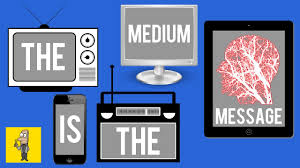
In 1964, the Canadian English professor, elevated to popular commentator, Marshall McLuhan coined a phrase that has become a throw-away truism for pop culture.  Since McLuhan penned the term, “the medium is the message,” it has frequently been used in reference to electronic communication.  In its simplest understanding, the phrase is meant to convey the idea that there is as much meaning in how a message is delivered, as there is in what the message says.  For example, reading a story about a missing child in a newspaper has a different impact on the recipient of that message, than hearing it broadcast into their living room via a television.

While he died in 1980, it would have been fascinating to hear how McLuhan would have applied his thesis to the modern internet age, and, in particular, social media.  It’s almost as if McLuhan had a prescient knowledge of what was coming.  Some of his words are no less relevant today, than they were when he uttered them over 40 years ago: “In the old days, you could pull the trigger on a revolver and hurt people, but, today, when you trigger these vast media that we use, you are manipulating entire populations.”

McLuhan would have applied his thesis to the modern internet age, and, in particular, social media.  It’s almost as if McLuhan had a prescient knowledge of what was coming.  Some of his words are no less relevant today, than they were when he uttered them over 40 years ago: “In the old days, you could pull the trigger on a revolver and hurt people, but, today, when you trigger these vast media that we use, you are manipulating entire populations.”

Our love-hate relationship with the message and the media used to convey it, therefore, are long-standing and polemic.   Social media is only the latest iteration in an ongoing topic of discussion.

And yet, it seems that with social media, we have created a level of anonymity and crowd mentality that elevates the ferocity and reach of the message.  That’s not to say that humans have unearthed a new form of viciousness with social media, rather that it has made it easier to give that viciousness broader reach and impact.  The medium amplifies the message.

 Sarah Silverman's Master Class

I was struck recently when I saw an article about the American comic, Sarah Silverman, and her efforts to use the medium to try to address some of the very ri

fts that it has exacerbated in recent years.  Through 

Twitter, and her now canceled Hulu show, I Love You, America, Silverman has embarked on a one-woman crusade to use the media available to her to better understand others, and bring together the divide, at least on an individual basis.

So, my letter today is to Sarah Silverman, a modern influencer who has mastered a medium that seems an unbridled behemoth to the rest of us.


Dear Ms. Silverman:

I was late to social media.  People had been talking about if for years by the time I entered the fray.

For the first little while, I found social media to be primarily entertainment.  While news organizations and politicians used the medium to speak to the broader public, most things seemed the 140-character equivalent of pulp fiction; either light and fluffy, like cat videos, or, literally, click-bait, used to redirect your attention.  Very little of what I initially found on social media seemed particularly insightful, thought-provoking or even useful.

That’s not to say it didn’t capture my attention and send me into a virtual rabbit hole, gouging chunks of time out of my life.  Rather, social media seemed the informational equivalent to cotton candy, sweet and enjoyable at first, but gone in an instant.

And then, two things happened.

In the spring of 2011, a magnitude 9 earthquake, and subsequent devastating tsumani, hit Japan, taking with it large sections of coast line and the Fukushima Nuclear Reactor.  In the first few hours following the disaster, traditional media was blind, unable to get on the ground.  Social media, however, was given a megaphone.  Amateur images and social media posts flooded headlines and television screens.  In the wake of that unspeakable tragedy, it became evident to me that information flow had shifted.

In that same year, we were witness when an anonymously created Facebook page, in an already politically polarized region, launched unprecedented demonstrations in the Arab world, leading to the overthrow of the Egyptian government.  The Arab Spring rolled across the Middle East on the strength of social media.  And while the demonstrators had used the might of social media to unit against dictatorial regimes, as the region moved into a new political environment, that same tool was used to spread misinformation, attack and intimidate individuals, and undermine calls for change.

Fast forward to today, where entire news articles are written about Twitter’s reaction to events, as if the social media platform was a living person.  What’s more, social media platforms are credited with unlimited powers – the power to shame, the power to elevate, the power to influence elections.

The world has now woken up to the true power of social media, and seems to be still holding its breath to determine whether that power is for good, for evil, or just negligent to its impact.

It was in this mind-set that I participated recently in a GrowSmartTalks session on internet safety for tweens, and learned more about what actually lurked out there.  I was shocked to learn of the extent of social media’s reach into our children’s lives – from Tinder for teenagers, to social media sites whose purpose had become high level bullying or worse.  As a mom, it worried me, as a human being, it terrified me.  It was starting to seem that social media was subsuming are instincts for compassion and grace, and, in their place, elevated a platform to drive crowd mentalities rooted in our worst natures.

While I was pondering the fearsome influence social media now has on our lives, I came across a story about some of your interactions in the Twitter-sphere.

With 12.5 million followers and a stand-up career, it was clear to me that you were an influencer in North American culture.  Unabashedly left on the political spectrum and an outspoken opponent of the current U.S. administration, your relationship with social media seemed to be as a massive, glow-in-the-dark target for those who disagreed with your opinions and politics.  From an outsider’s perspective, you seemed to give as good as you got, and had mastered the not-so-delicate art of using the medium to amplify your message.

And then, a little over a year ago, you had a choice to make when a Twitter-troll called you a sexist and derogatory name.  Rather than fire back in kind, you made a conscious decision to respond with compassion.  The end-result was that, through your advocacy, the guy was able to get some desperately needed help with a chronic pain condition.

It wasn’t global change.  It didn’t lead to breaking-down silos or eliminating the polarization that currently plagues the U.S. electorate.  But, it that simple act, Ms Silverman, you demonstrated how social media could be used as a tool for compassion, and good.

In a recent TED Talk, the creator of the original Facebook page that helped launch the Arab Spring, Wael Ghonim, noted that “while it’s true that polarization is primarily driven by our human behaviour, social media shapes this behaviour and magnifies its impact.”

I would take this one-step further – human nature is what it is, and social media allows us to magnify every part of it –  the good, the bad, the silly, and the just plain ugly.  But its power seems balanced between good – as in the case of people searching for their loved ones in the wake of a disaster or when high school students harness its power to bring an end to gun violence – and evil – exemplified when foreign governments successfully manipulate the outcome of an election or climate change deniers manipulate large segments of the population through mis-information on Facebook.

I don’t know where we will go from here, Ms. Silverman, or how social media will shape our characters into the future.  I do know, though, that there is a balance out there.  And if we have more who follow your example of reaching out to those in pain, and using the medium to effect some positive change, regardless of personal political beliefs, maybe, just maybe, we’ll be alright.

We are Holden Caufield

“Don’t ever tell anybody anything. If you do, you start missing everybody.”
–          Holden Caufield
   
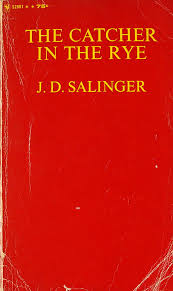
Like many people, I read Catcher in the Rye as a teenager.
And while the novel was, and still is considered, a seminal work, I honestly can’t remember if I read it on my own or if it was required read9a90-CITR252822529ding; nor can I remember if I liked the book or not.  I have no recollection of the impression, if any, the story made on me as a teen, nor did I remember much of the plot.  The only thing that has stuck in my memory over the years is that the lead character, Holden Caulfield, was plagued by a relentless moroseness and aimed his disgust at what teenagers typically target in their bid to be individuals – the system, adults, commercialism.  What I took away from my first read of the book was a true understanding about the idea of ‘voice’ in literature, here was an author who used the voice of a teenager to convey his message.
 
Catcher is one of those books referred to in reverential terms as “the voice of a generation”.  As good literature frequently does, it struck a chord.  Written in 1951, it captured the angst, dissatisfaction, fear and loneliness bubbling beneath the surface of the post-war generation.  It conveyed the emotions and words for youth who, like many before and many since, were suffering from a cultural aphasia preventing them from expressing it themselves.  In so doing, J.D. Salinger opened a dialogue, even if he then swiftly retreated into his own self-imposed exile from that generation.  As Washington Post columnist Ron Charles recently noted, “Holden [was] Patient Zero for generations infected by his misanthropy.”
 
It’s not surprising that the twitter sphere has taken some cracks at tweeting on Holden’s behalf, but there is not a barrage of fan rewrites or add-ons to the book.  Salinger limited the marketing and proliferation of Holden from the very beginning.  No sequel followed, no screen or stage adaptation.  He steadfastly refused to allow Holden to become anything other than what he was – a character between the covers of a book.
 
So, Holden remains as he always has been, never really fitting in wherever he goes – with his family, at school, during his romp through New York.  From the outset, he is damaged, whether by loss of his brother or his own loneliness, it’s never clear.  What is evident when I re-read Catcher, is that he is alone, negotiating that horrible time in adolescence when you are old enough to know there are expectations, but too young to really understand them.   In the opening pages, Holden stands on a hill overlooking the school he has just been kicked out of, and the students who have just ostracized him, (“…because practically the whole school except me was there…”).  And as the story moves along, Holden throughout remains isolated and alone.
 
Literary analysts have noted that Holden envisions himself as the “catcher” of innocents, standing on the edge of the field, trying to catch other children as they come out of the “rye” into the world of experience.  And yet, as his little sister tells him in the book, Holden has the lines wrong from a Robert Burns’ poem.  The line is actually “If a body meet a body”, not catch.  The entire novel is evidence of this, as we follow Holden through his romp with adulthood, living what he believes the adult life to be – in bars, hotels and in the company of a prostitute.
 
But, I would argue that the heart of the novel, and what permeates every single exchange that Holden has, is his deep loneliness and his desperation to connect.  He decries all the phonies, but is drawn to anyone even though his inner monologue reveals his contempt.  His teacher who he goes out of his way to visit but is repulsed by as soon as he sees him (“… old Spencer had on this very sad, ratty old bathrobe that he was probably born in or something”);  his classmates who he can’t stand, but whom he keeps engaging in conversation to stave off being alone (“I didn’t answer him.  All I did was, I got up and went over and looked out the window.  I felt so lonesome, all of a sudden.  I almost wished I was dead.”);  the phone calls he makes to various girls, all of whom he professes to find ridiculous, but yet he can’t stop himself reaching out; the strangers from the taxi driver to the girls in the bar, right up to the prostitute, in whom he seeks solace and human connection, but whom he professes also disgusts him (“They didn’t invite me to sit at their table – mostly because they were ignorant – but I sat down anyway.”) 
 
And yet, Holden also has moments of deep compassion and mature insights (“It’s funny. All you have to do is say something nobody understands and they’ll do practically anything you want them to.”), and a capacity to love (“Then she turned her back on me again.  It nearly killed me, but I didn’t say anything.)”   Does any of this sound familiar?  If the internet could be personified into a single character, it would be Holden Caulfield.
 
Holden, like all of us, is a complex creature with love, hate and everything in between bubbling inside of him.   He is the every man represented through a teenage boy, a boy perched on the edge of manhood struggling to divest himself of the harsh judgment and emotional intensity of adolescence, before the edges of adulthood dull the emotive colours from his world.   Salinger’s genius in Holden is creating an amplified version of us, by harnessing the raw intensity of the teenage voice.
 
Rereading the novel, I can’t help but wonder what Holden’s ‘voice’ would have been had he had access to the current suite of social media tools available today.  Would Holden’s “phonies” be the target of social media campaigns?  Would he use anonymous twitter accounts to tell them all what he really thought of them?
 
I question whether the current culture of over-sharing, media darlings, and shock entertainment would have left any innocence with which Holden could grapple.  If he had grown up in a world where school shootings are common place, celebrities are created by their willingness to have their lives broadcast, and youth have learned to eschew concepts of privacy thanks to Instagram and SnapChat, what would Holden’s disaffection look like?
 
And while I pondered this question, it dawned on me that I hear Holden’s voice all the time.  It is there in every sardonic, derisive, or immature tweet.  It’s there every time a Twitter war starts over an ill-thought off-handed comment.  The only difference is that while most of Holden’s perceptions of people, and the world, remained within the confines of his narrative in the story, today’s youth have no aversions to broadcasting their thoughts.  Catcheris told in the first person, and while we learn through dialogue how skewed Holden’s perspective is, we still see the world through his eyes.  But, his thoughts and opinions stay largely in his own head.  Today, Twitter, Instagram and a myriad of social media platforms allow us to learn what is going through the minds of every single person living in their own Holden moments.  Periods of loneliness, anger, dismay and just plain moroseness come out easily as vicious and spiteful, easily slipping out from behind the mask of a computer or smart phone.
 
We don’t need a writer’s imagination to visualize what Holden would be like today.  We only need to spend 10 minutes on the Twitter-sphere to know that the world is filled with modern Holdens, who voice daily their contempt, pain, and confusion, but also their wonder and love, through the social media platforms of their choosing.  Unlike Holden though, we no longer have a sense of innocence.  We are now on an endless march towards virtual experience.
 
Perhaps that is why Catcher remains relevant 68 years after it was originally published.  There have been 3 or 4 generations since the novel made its debut, and yet little seems to have changed in the human condition.  We still lash out in loneliness and pain, still seek to find the external causes of our hurt (“the phonies”), the only difference is that we no longer need to make our way through a book to read all about it.
 
Salinger was notoriously reclusive, and we will never know what truly motivated his Holden, but he created an iconic character who still resonates today and has become an enduring cultural legacy.  Holden is us, and we are Holden.  ‘Twas ever thus.