In an ironic twist, our reliance on digital devices to keep our kids safe and connected to us, may be hurting them.
Smartphones are as much a part of teenage life today as are pimples and first crushes. Recent data though is pointing to a digital overdose problem and, as parents, we need to help our kids better negotiate their digital habits.
In a recent article for the Atlantic, American psychologist Jean M. Twenge noted that “the arrival of the smartphone has radically changed every aspect of teenagers’ lifes, from the nature of their social interactions to their mental health.”
Recent data collected by the Canadian Technology Association suggests 80 percent of Canadian households own a smartphone. The current generation of teens are the first to have truly grown up with mobile devices.
With that level of smartphone saturation, it is not surprising that a MediaSmarts survey revealed a high number of teens spending, on average, between 1 to 2 hours per day on devices for non-school work purposes every weekday, and even more on weekends. Particularly concerning, given the disturbing effect that screens can have on sleep, is the high number of teens who used smartphones at bedtime. In the Canadian Technology Association study, 79% of parents reported that their 14- to 15-year-olds used their devices after they’d gone to bed.
While it didn’t draw a link between smartphone use and mental health, the 2017 Ontario Student Drug Use and Mental Health Survey did find that the proportion of students in grades 7 to 12 reporting moderate to serious psychological distress had climbed by 15% since 2013. The Survey further found that about one-in-six secondary school students related symptoms that may suggest a moderate-to-serious problem with technology use (preoccupation, loss of control, withdrawal, problem with family/friends).
Dr. Lauren Humphreys, an Ottawa psychologist who has worked with adolescents with mood and anxiety disorders since 2003, has seen a range of issues among her teenage patients related to smartphone use, including sleep deficiencies and stress around constant peer judgment.
One of the major issues that Dr. Humphreys has seen around smartphone use has been “the sense of pressure and obligation to be always available for conversations with peers, and to respond as quickly as possible upon receipt of a message.”
So, while there is no definitive proof that smart phones are the cause of rising levels of anxiety for teens, it seems highly unlikely that constant screen use could be helping with stress levels.
But, here’s the kicker.
Despite growing evidence that smartphones may not be good for our children’s mental health, we keep buying them for our kids. According to data gathered by MediaSmarts, nearly three quarters of 14 and 15 year-olds in Canada have their own device.
My teenagers have laid out all the logical arguments for why I should buy them a smartphone – they can use it for school, I’ll be able to reach them when I want to, they’ll be able to call me when they change plans or want a ride. My kids have pegged my parental insecurities and used them to bolster their arguments. And they aren’t wrong.
There are benefits to digital devices – for learning, for socializing, for recreation. There is even a sense among parents that a digital tether will keep our kids safer in the big bad world. However, we wouldn’t give the car keys to our teenager without making sure they have had driving lessons. Why is it that we are comfortable giving our teenagers a powerful tool without teaching them how to use it safely?
While we can’t do away with smartphones, the good news is that there are habits we can learn, and we can teach our kids, that can help.
According to Common Sense Media, there are some relatively simple guidelines that can help families manage digital overload.
First and foremost, no screens at bedtime. Simple, manageable and something from which the whole family can benefit.
Next, set clear limits around screen use, and stick to them. Yes, the kids with harangue you at first, but most parents have already tackled limit setting and lived to tell the tales.
Lastly, and though it seems counterintuitive, know and use the technology. There are a number of apps and hacks available to help us better manager screen use, such as Screen Time for iphone users or simply deleting social media apps from your phone.
Ultimately, we parents won’t be able to compete outright with digital devices. But, maybe, just maybe, we can give our kids a few tools to help them along the way.
Three months ago, I started what I have come to call my “family sabbatical”. This elaborate title is code for the far simpler fact that I’ve taken a year off from work, to tend to some family needs.
The impetus for this decision was really a kid needing some extra help with learning challenges. It wasn’t overwhelming, but husband and I agreed that it really should be one of us who provides that extra support. Over the years, we’d outsourced a fair number of chores, and relied on child care, to be able to maintain our respective careers. This new challenge, however, was something that we wanted to put onto one of us. And so, thanks to the benefits available to civil servants, and an understanding and supportive senior management, I’ve stepped away from my career to focus on the “Mom” job for awhile.
Don’t get me wrong, this was not a simple decision. There was months of pondering, talking, debating, weighing pros and cons, self-reflection, and even arguing, before husband and I decided this was right for us. And while my kids’ needs are paramount, this was not the only factor that went into this decision. Far from it. I had to take a hard look at where I was at in my career, in my life, in my marriage, and in my family. I had to consider who I was, who I wanted to be, and where my dreams were hiding.
But the most interesting part about this journey, so far, has been the revelation that I am not alone. While I’ve joked, and daydreamed, with colleagues and friends over the years about leaving our jobs, and focusing on what mattered in our respective lives, I never really believed that any of us would seriously consider it. Until I did.
And now, I’ve become a canary in the coal mine. These same friends and colleagues look at me with bemused interest and uneasy curiosity. They want to know, why I did it? What am I doing with my time? Do I miss work? Am I happier? What does it feel like? I sometimes feel like they’re looking at me like a kid would gawk at chocolate-covered broccoli; they’re tempted by the chocolate, but having trust issues with the broccoli.
So, this letter is to all those friends and colleagues in the hopes that I can provide some insights. They may not be entirely satisfactory, but I hope there is enough to help those of you considering your own paths.
Dear friends:
I’ve lied to you.
I didn’t know I was doing it at the time, of course, but with hindsight comes some clarity. Over the years, I’ve said to many of you that I would have no problem taking that step, when it was time for me to leave work. That if I won the lottery tomorrow, I had a bucket list as long as my arm, and ambitions for a second life in retirement. I bragged that I would fill my days with things I WANTED to do, instead of things I HAD to do.
And while the bucket list is indeed real, and I still have some fabulous plans for “Freedom 50+”, I completely misjudged how difficult it would be to actually step away from my career.
I was getting through life just fine, after all. I had accomplishments, a good career, trusted colleagues. I was reasonably happy, with healthy, well-adjusted kids, and a strong marriage. I liked where I lived, was financially comfortable. I maintained fulfilling friendships.
The bottom line was that I was not unhappy with my life. Sure, I was stretched and stressed, but wasn’t everybody? I was meeting expectations, and in some cases, exceeding them. And so, the question of whether to step back from work seemed, initially, to be a ridiculous indulgence. I was doing just fine, thank you, and my challenges were no different from everyone else’s.
And yet, once the notion wormed its way into my brain, it was like a mosquito in the dark. Quiet for a moment, and then buzzing again in my ear, making it impossible to settle back into restfulness. With the buzzing, came the questions. Can I really manage my kids’ needs and maintain the current tempo? Am I enjoying this pace and intensity? Am I present in what is happening to me or am I just getting through the day, getting through my life? Is getting through enough for me? Or do I want my days to be different? Am I where I want to be at any given moment in my day?
And once I started asking these questions, and truly considering them, it was like a veil was lifted. I started to see my life from a new angle, and I only had more questions. Was it normal for my blood pressure to go up 20 minutes before I needed to leave work, because there wasn’t any room for slippage in the evening schedule? Was it healthy that I could read several pages of a book to my kid, and have no recollection of what I’d read, because I was thinking of all the tasks I needed to get done at work the next day? Was I being who I wanted to be when I spent every run with a friend ranting about the latest issue rattling around in my brain, instead of investing my time in that friendship and enjoying the endorphins? Was I insane to even be considering stepping away from a career that I had spent 20 years building, just so life could be a little easier?
What finally dawned on me is that all of us spend our lives working several jobs. Sure, we have our careers, but there are other parts of our lives that take up just as much energy. We are children, parents, siblings, life partners, friends and community members. On any given day, we move back and forth between each of these roles. Some days, we knock it out of the park; other days, we drop every last ball, and watch them roll around aimlessly, before picking them back up again.
After all these questions rattled around noisily in my brain for some time, I finally decided that, in fact, I was tired of juggling. I was tired of spending every waking hour concentrating solely on the balancing act. I wanted to set one or two of the balls down, and stop careening around wildly to keep them all balanced. I wanted to take a step back, and focus on being a better juggler, and have a chance to watch my act. You see, I’ve come to realize that my life is one hell of an incredible show, and I was missing huge chunks of it.
All that consideration and rumination seems easily summarized in a pithy blog post. But the blunt reality is that it took me months to work through all these questions. In the end, taking the leap required that I overcome two ingrained, ever-present and crippling fears. The first was the fear of “they”. We all know who “they” are, though we’d be hard pressed to identify them. It is who we are referring to when we say to ourselves, what will “they” think? Will “they” say I couldn’t cut it? Will “they” think I was lazy? Indulgent? Weak? It was only when I managed to ask myself who exactly “they” were, that I was able to step outside that question and see that the omni-present “they”, were, in reality, only my own insecurities personified. In accepting that, “they” lost power over me, and it felt good to get away from the judgmental bastards.
The second fear is much harder to overcome, and I’m still working on it. It is the very basic, yet terrifying, fear of failure. In unshackling myself from some of the demands of the ‘have to do’s’, it opened a path for the ‘want to do’s’, and that was the ‘road less traveled’. What if being home makes no difference in my family’s life? What if I step back from my career and nothing feels different? What if I’m wrong about my assumptions and this is not the solution? What if giving myself this time proves that I was kidding myself about that bucket list, and the dreams die under the weight of expectations?
I was walking by a little family run restaurant the other day. It’s one of those small places that always seats customers by the front window to make it look full of happy patrons. A family was just arriving; mom, dad, and a little guy about 4 or 5 years old. While talking to her husband, mom was taking off the little guy’s hat, mitts, coat. Her eyes were on her husband, with occasional little darts to the kid, as her hands mindlessly performed tasks she’d probably done a million times. I bet if I asked her what article of clothing she removed first, she’d have no idea. She may not even remember having done it in the first place. And it struck me, that’s how I had been living my life; eyes ahead focusing on the next thing while I unconsciously went through a myriad of little actions. Some of these are meant to be mindless. Do we really need to be conscious that we are locking the door that we’ve locked thousands of times? But where is the tipping point? Where is that moment where you are missing the stories, missing the smiles, missing the tears, missing your life?
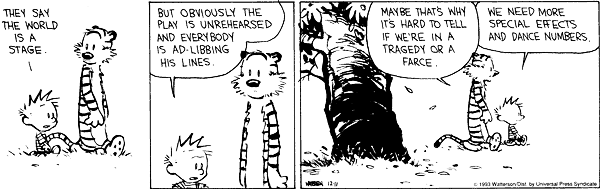
If Shakespeare was right that “All the world’s a stage/ And all the men and women merely players”, then I am still figuring out my part. I freely admit, that even 3 months into my sabbatical, I am still wrestling with the fears, and I don’t know if I’ve made the right decision. What I can tell you is that I am not suddenly a perfect parent, my child’s learning challenges have not magically dissipated, nor have I managed to write the great Canadian novel now that I am freer to do so. But, I feel more like myself than I have in years, I look forward to every single day, and I am writing this post today. It doesn’t mean every day is perfect, nor that I’m suddenly knocking every day out of the park. For me, it means that my juggling act is getting a little better with each passing day, and I am a sentient actor on the stage that is my life. I am not parroting the lines, nor going through the actions mindlessly. Rather, I am helping to shape the plot as I go, and responding honestly and mindfully to the twists that are put in front of me. And, for now, I like how that feels.
Over the last few years, I’ve had an opportunity to get to know more about coaching.
Don’t get me wrong, that’s not to say that I’ve learned “how” to coach. No, that is a skill I will likely never master.
Rather, as a mom with kids in sports, I’ve been an observer at practices, games, meets, tournaments, where I’ve watched coaches interact with their young athletes. I’ve seen volunteer parents who know nothing about the sport take on the challenge. I’ve watched trained and experienced coaches lead a group of rookies in the sport. And, I’ve had a chance to watch everything in between.
I’ve even taken a rather unsuccessful crack at coaching myself as one of those keen, but really clueless, parents who knew the sport, but had no idea how to teach it. You know the ones. We mean well, but we have no idea how to explain to a child how to wind up for that shot, straighten their start or make that crisp pass.
My own coaching career culminated in a snow pile. Towards the end of the season, I was leading a practice on a field strategically positioned just beside the Zamboni door of an arena. It being late summer, it was, apparently, time for the Zamboni to empty its snowy guts at the edge of the parking lot that the arena shared with the field. For an entire practice, I tried to get the kids to focus on the drills or my instructions, rather than the enticing grinding as the Zamboni dumped more and more of its icy contents. With 15 minutes left of the practice, I gave up, and yelled: “King of the Castle!”
The kids didn’t need another prompting. Within seconds, they had flown across the field and were bounding up the snow mound faster than I’d seen them run all season. A hilarious, wet and utterly glorious snowball fight ensued. I subsequently learned that not only have elementary schools in my community outlawed the practice of snowball fights, kids are no longer allowed to climb up big snow pack hills. Needless to say, I yet again questioned what the heck I was doing coaching.
All the above to say that I have nothing but the utmost respect for coaches, the role they play for the teams they are coaching, and the importance of them in my kids lives.
There is one thing, however, that I didn’t notice while I was coaching but that I wished I had known. Maybe experienced coaches already know this, but as an observer (and a paltry practitioner), I thought it worth raising in a post.
And so, a letter to the Coach…
Dear Coach:
First off, let me applaud you. Coaching is a rather thankless task. The kids will frequently grumble about the drill or the push-up you’ve assigned, and will rarely thank you themselves. While the parents? Well, they will MEAN well, but they can have high expectations of what you’re able to accomplish with their child or the team – some realistic, some not so much.
But let me tell you, while those kids will, at times, blame you, ignore you or drive you insane, never, ever doubt that they are watching you.
They are watching the way you walk, the way you talk, what you eat, how you move, and even what you wear. They are taking in every aspect of who you are and drawing conclusions – in the literal way that kids do – about how they should ‘be’ in this world.
This was brought home to me – literally and figuratively – when we had the opportunity this past summer to host a couple of out of town coaches for a summer sports camp. The “boys” as we called them – though they were young men in their early 20s – stayed with us for a week. They were polite, respectful, engaging and oh so young to my 40-something brain. They spent their days with the kids at the camp, but had most of their dinners with us, so we got to know them a little.
For my son, the coaches were better than if the iPad and the Xbox merged into a single super electronic Mecca. He watched absolutely everything about them and asked a million questions.
Before they arrived, he wanted to know everything he could about them. Who are they? Where are they from? What do they eat? Do they play? How old are they? Do they speak English? He peppered us with endless questions before the camp organizers even gave us names.
When we finally got a short bio for each coach, my son poured over the photos and the little information provided and instructed me on what foods we could and couldn’t make for them. And again, the questions came incessantly. How old are they? Where were they born? What to they do? Do you think they’ll like it here? I was honestly dumbfounded by the interest. I thought he’d find it interesting, but his admiration and “star-struckness” were palpable.
When the coaches finally arrived, my normally incessant talker who can’t sit still was in a minor trance. At meal time, rather than his customary regular ups and downs, he was silently still the whole meal. From my vantage point at the table, I could see him alternating between intense concentration on what they were saying and eyes shyly darting back and forth. He didn’t leave the table once while they were there. He didn’t get up and down and fidget about. He was glued in his seat until the meal was over and the coaches left the table.
And his observations about these two boys would have put Sherlock Holmes to shame.
He noticed that Coach Liam wore a chain around his neck that he adjusted when he was bored. He noticed he didn’t think much of international football, supported Liverpool, that he said crisps for potato chips and that he was tired a lot. He noticed that Coach Haroom had shwarma for lunch everyday, liked to laugh at the kids’ jokes, had more energy on the field and didn’t like the heat. My son noticed what they ate, how they talked, how they held themselves. He noticed it all.
I knew from experience that their coaches have an impact on my kids’ lives. They choose what to eat, or not eat, they change their body positions or how they move, they adjust their attitude or their perspective all based on what the coaches have told them.
But let me tell you, Coach, it is far more than what you say and do in practice that impacts the kids. They are watching and learning from absolutely everything you do – your tone, your body language, your preferences and your off-handed comments.
They may not seem to be listening to your instructions, may be goofing around and you may have to explain to them for the 10thtime how to do the drill, but never doubt whether they are watching you.
They are taking it all in, processing, absorbing and learning from you in ways you might never expect. They are learning how to be an athlete, a teammate and deciding what kind of person they want to be in life by watching what you do, how you interact with them and with others.
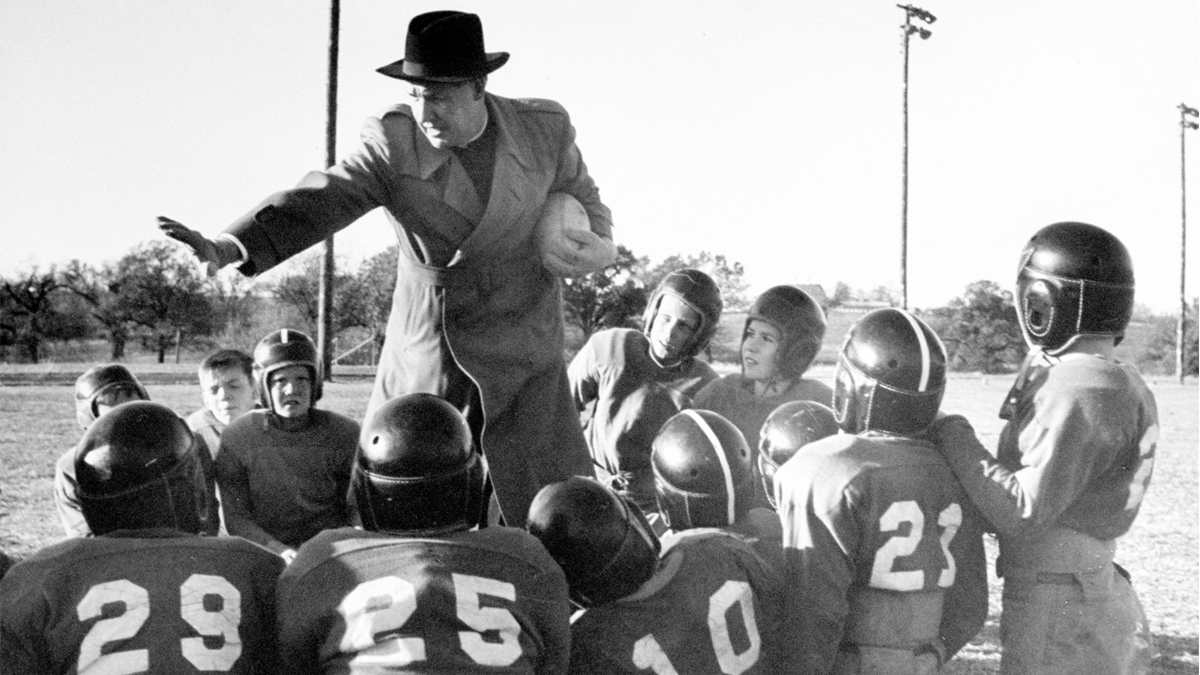
Whether you know it or not, Coach, you are on a stage every time you step onto that deck, field or gym. When your team is around you, you are in one of the most intense spotlights you will ever experience, and you are helping to shape the next generation.
It’s a pretty intense role, and I wish you strength and luck. And I offer my gratitude, as well as my quiet plea to take care of your charges. Whether you know or it not, you are helping to shape these kids, and that is an awesome responsibility.
I know it’s been since March, and while I kept meaning to get back to this, I’ll admit I was sidelined for a few months, mainly trying to ponder the next move in this game of transition chess.
You see, I had reached a point where something had to give. Like almost everyone, everywhere, life kept piling on more responsibilities, more expectations, and it was getting harder and harder to see a few moves ahead. And the end game?
Well, it was largely non existent. There was simply no space to look at the board from above to see where it was all going, divine what my opponent had in store, and imagine how I wanted this game to end, where I wanted to be when the game was reaching its last few moves. And so, I’ve stepped back from the board a little.
I’ve decided to leave work for a year to focus not only on my family, but myself. To explore how I fit into the game board and what pieces I truly want to carry with me.
Surprisingly, it wasn’t an easy decision and it’s had me thinking lately about the expectations that women face, to have a successful career, a well-kept home, successful children. I’ve been wondering about the expectations our mothers, grandmothers faced. I expect they were no less difficult, but given societal mores at the time, they would have been different.
My next letter then, is to Ms. Betty Friedan, author, feminist and the first one to really suggest out loud that women’s mental health depended on their ability to fulfill all aspects of their lives.
Dear Ms Friedan:
It has been 55 years since the publication of The Feminine Mystique, the book that challenged our blithe acceptance of gender roles and asked fundamental questions about whether women could indeed achieve fulfillment by reaching the perceived societal pinnacle of wife and mother.
In that book, you postulated that societal constructs after WWII – everything from advertising to education – reinforced the ideology of women as home-makers fundamentally limiting the ability of women to pursue careers. My grandmother’s generation was the target of your analysis and commentary. Women who had moved into new roles during the Second World War, and found themselves facing a return to societal gender norms. But it was my mother’s generation who took up the mantle. Frequently home makers themselves, they nonetheless expected that their daughters would be educated and have different options.
And so, here we are, 55 years on. I am a highly educated professional woman who has spent 20 plus years building a career. I went after the brass ring pursuing, and completing, a PhD. I rose into an executive position and established myself as a career woman.
At the same time, I married and had kids. You see, my generation is supposed to be the one that has it all. I am supposed to be able to play with the big boys in the corporate boardrooms and bake a perfect cake for my son’s class party. I should easily handle juggling soccer practice with a conference call, home cooked meals with project deadlines, and at the same time, stay healthy and fit so my husband still finds me desirable. At least, this is what the women’s magazines tell me.
But here’s the kicker… I can’t.
I can’t juggle late nights at the office and prepare evening meals for my family. I can’t keep focused on the project needs and help my daughter through the latest teenage angst. I can’t run 5 kms a day, maintain a skin regiment, make a perfect balanced dinner and ‘lean-in’ at the boardroom table.
And yet these same magazines that told you and my grandmother how to keep pretty for her husband and keep a perfect house, are telling me that I should be able to do all of the above and more. Not only that, they tell me it’s simple. If I just use the recommended cream, organization tips, read the right books, go to the right university, be docile or aggressive enough, care about my appearance more, stop obsessing over my appearance, and a million and one other things that I should, shouldn’t do.
I fear Ms Friedan, while I completely agree with your argument that women should be able to pursue careers, that society has warped this idea by maintaining the same standard that women should at the same time, be able to be the perfect wife and mother with the exact same expectations that our mothers and grandmothers faced. We are still expected to be the care-givers. We are still expected to put effort into our appearance so that we are attractive to men whether on the soccer sideline or the boardroom table. We are still asked to have lovely homes and gardens, and perfect children.
Conversely, even though women are more present in the boardrooms and executive tables, societal expectations on men vis-a-vis the home front have not significantly shifted. It is still not really broadly common for men to take parental leave (though it is shifting a little), statistics show that men still do less of the house work and child care duties, and corporate culture is not accepting when a man needs to leave work to take care of a sick kid.
There seems to be a fundamental disconnect. Women are expected to be the same home makers and mothers that they always have been, as well as, strive for a career and push the boundaries of corporate acceptance. But it hasn’t quite gotten there yet.
According to the Gender Equity, Diversity, and Inclusion: Business and Higher Education Perspectives (2017) from the Conference Board of Canada, women obtain 56 per cent of bachelor’s degrees and 51 per cent of master’s degrees. They also make up a majority of college graduates, at 58%. What’s more, the participation rate for women in the workforce is 74%.
And yet, despite these high levels of education, and making up 48% of the labour force, among Financial Post 500 companies, the proportion of board of director seats held by women was only a little over 20% in 2016. And based on recent data, it is clear that even these women can expect to make less money. Expanding the story even further, according to a Harvard Business Review article published in January, 2018, 43% of highly-qualified women with children are leaving careers or taking a career break.
It’s an odd picture to consider. Women are getting the education, getting into the labour market at comparable rates to men, yet more are being paid less and choosing to leave the labour market, even temporarily, to make things work.
Given these numbers, I can’t help but wonder if women in my generation have been set up to fail. Ms Friedan, I think your arguments opened the door for half the equation. Women should have equal access to education and the labour force and to some degree this has been achieved (though women are disproportionately engaged in part-time work and still remain relatively few in the STEM fields).
The problem is that the equation was stretched on one side only. There is an expectation that has developed that women do indeed need to be part of the workforce to be engaged and promote their well-being, but somehow, nothing has changed with respect to the traditional expectations of the gendered domestic roles. Anecdotally, those who reach the upper echelons rely more on 3rd party help – nannies, cleaners, gardeners – and balance the additional expectations by carefully outsourcing some aspects of their lives. But not many have the means for this, and rely on a better balancing with their partners.
That’s not to say that there haven’t been changes – men are more engaged with childcare, more involved in aspects of domestic life – but the change on that side of the equation has been nowhere near as fast, as the statistics point out. And more detrimentally, like it or not, it is less acceptable for a man to side step work responsibilities for home ones.
Ultimately, what these statistics mean to me, is there are more like me out there. More families for whom, when it came time to decide who would leave work to help us get better balance and meet life goals, it was more acceptable – financially and culturally – for mom to leave the labour force. And what’s more, it was my preference as well, because those same “societal” expectations are ingrained in me.
Maybe someday, we will have a better balanced equation, but for now, we’ll make the moves we have available to us, and hope for the best.

 In an ironic twist, our reliance on digital devices to keep our kids safe and connected to us, may be hurting them.
 health, we keep buying them for our kids. According to data gathered by MediaSmarts, nearly three quarters of 14 and 15 year-olds in Canada have their own device.



 Median Mama