
Dear Coach

Over the last few years, I’ve had an opportunity to get to know more about coaching.
Don’t get me wrong, that’s not to say that I’ve learned “how” to coach.  No, that is a skill I will likely never master.
Rather, as a mom with kids in sports, I’ve been an observer at practices, games, meets, tournaments, where I’ve watched coaches interact with their young athletes.  I’ve seen volunteer parents who know nothing about the sport take on the challenge.  I’ve watched trained and experienced coaches lead a group of rookies in the sport.   And, I’ve had a chance to watch everything in between.
I’ve even taken a rather unsuccessful crack at coaching myself as one of those keen, but really clueless, parents who knew the sport, but had no idea how to teach it.  You know the ones.  We mean well, but we have no idea how to explain to a child how to wind up for that shot, straighten their start or make that crisp pass.
My own coaching career culminated in a snow pile.  Towards the end of the season, I was leading a practice on a field strategically positioned just beside the Zamboni door of an arena.  It being late summer, it was, apparently, time for the Zamboni to empty its snowy guts at the edge of the parking lot that the arena shared with the field.  For an entire practice, I tried to get the kids to focus on the drills or my instructions, rather than the enticing grinding as the Zamboni dumped more and more of its icy contents.  With 15 minutes left of the practice, I gave up, and yelled: “King of the Castle!”
The kids didn’t need another prompting.  Within seconds, they had flown across the field and were bounding up the snow mound faster than I’d seen them run all season.  A hilarious, wet and utterly glorious snowball fight ensued.  I subsequently learned that not only have elementary schools in my community outlawed the practice of snowball fights, kids are no longer allowed to climb up big snow pack hills.  Needless to say, I yet again questioned what the heck I was doing coaching.
All the above to say that I have nothing but the utmost respect for coaches, the role they play for the teams they are coaching, and the importance of them in my kids lives.
There is one thing, however, that I didn’t notice while I was coaching but that I wished I had known.  Maybe experienced coaches already know this, but as an observer (and a paltry practitioner), I thought it worth raising in a post.

And so, a letter to the Coach…


Dear Coach:
First off, let me applaud you.  Coaching is a rather thankless task.   The kids will frequently grumble about the drill or the push-up you’ve assigned, and will rarely thank you themselves.  While the parents?  Well, they will MEAN well, but they can have high expectations of what you’re able to accomplish with their child or the team – some realistic, some not so much.
But let me tell you, while those kids will, at times, blame you, ignore you or drive you insane, never, ever doubt that they are watching you.
They are watching the way you walk, the way you talk, what you eat, how you move, and even what you wear.  They are taking in every aspect of who you are and drawing conclusions – in the literal way that kids do – about how they should ‘be’ in this world.
This was brought home to me – literally and figuratively – when we had the opportunity this past summer to host a couple of out of town coaches for a summer sports camp. The “boys” as we called them – though they were young men in their early 20s – stayed with us for a week.  They were polite, respectful, engaging and oh so young to my 40-something brain.  They spent their days with the kids at the camp, but had most of their dinners with us, so we got to know them a little.
For my son, the coaches were better than if the iPad and the Xbox merged into a single super electronic Mecca. He watched absolutely everything about them and asked a million questions.
Before they arrived, he wanted to know everything he could about them.  Who are they?  Where are they from?   What do they eat?  Do they play?  How old are they?  Do they speak English?  He peppered us with endless questions before the camp organizers even gave us names.
When we finally got a short bio for each coach, my son poured over the photos and the little information provided and instructed me on what foods we could and couldn’t make for them.  And again, the questions came incessantly.  How old are they?  Where were they born?  What to they do?  Do you think they’ll like it here?  I was honestly dumbfounded by the interest.  I thought he’d find it interesting, but his admiration and “star-struckness” were palpable.
When the coaches finally arrived, my normally incessant talker who can’t sit still was in a minor trance.  At meal time, rather than his customary regular ups and downs, he was silently still the whole meal.    From my vantage point at the table, I could see him alternating between intense concentration on what they were saying and eyes shyly darting back and forth.  He didn’t leave the table once while they were there.  He didn’t get up and down and fidget about.  He was glued in his seat until the meal was over and the coaches left the table.
And his observations about these two boys would have put Sherlock Holmes to shame.
He noticed that Coach Liam wore a chain around his neck that he adjusted when he was bored.  He noticed he didn’t think much of international football, supported Liverpool, that he said crisps for potato chips and that he was tired a lot.  He noticed that Coach Haroom had shwarma for lunch everyday, liked to laugh at the kids’ jokes, had more energy on the field and didn’t like the heat.  My son noticed what they ate, how they talked, how they held themselves.  He noticed it all.
I knew from experience that their coaches have an impact on my kids’ lives.  They choose what to eat, or not eat, they change their body positions or how they move, they adjust their attitude or their perspective all based on what the coaches have told them.
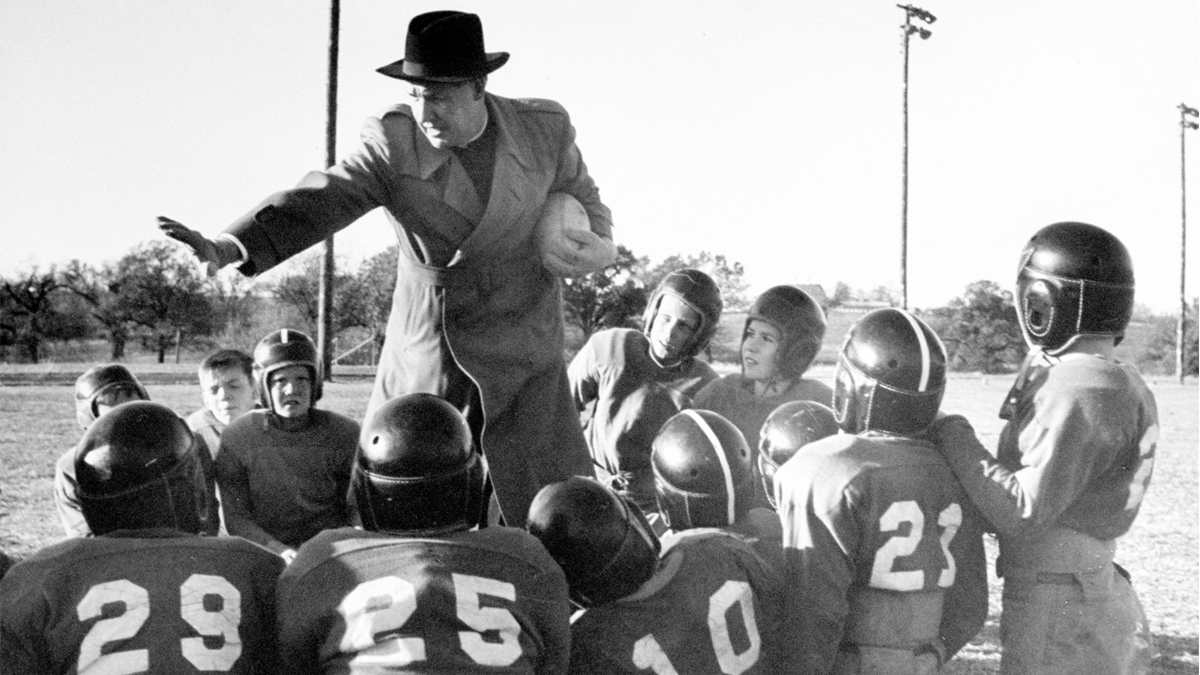
But let me tell you, Coach, it is far more than what you say and do in practice that impacts the kids.  They are watching and learning from absolutely everything you do – your tone, your body language, your preferences and your off-handed comments.
They may not seem to be listening to your instructions, may be goofing around and you may have to explain to them for the 10thtime how to do the drill, but never doubt whether they are watching you.
They are taking it all in, processing, absorbing and learning from you in ways you might never expect.  They are learning how to be an athlete, a teammate and deciding what kind of person they want to be in life by watching what you do, how you interact with them and with others.
Whether you know it or not, Coach, you are on a stage every time you step onto that deck, field or gym.  When your team is around you, you are in one of the most intense spotlights you will ever experience, and you are helping to shape the next generation.
It’s a pretty intense role, and I wish you strength and luck.  And I offer my gratitude, as well as my quiet plea to take care of your charges.  Whether you know or it not, you are helping to shape these kids, and that is an awesome responsibility.

 

A game of chess with Betty Friedan

I know it’s been since March, and while I kept meaning to get back to this, I’ll admit I was sidelined for a few months, mainly trying to ponder the next move in this game of transition chess.

You see, I had reached a point where something had to give.  Like almost everyone, everywhere, life kept piling on more responsibilities, more expectations, and it was getting harder and harder to see a few moves ahead.  And the end game?

Well, it was largely non existent.  There was simply no space to look at the board from above to see where it was all going, divine what my opponent had in store, and imagine how I wanted this game to end, where I wanted to be when the game was reaching its last few moves.  And so, I’ve stepped back from the board a little.

I’ve decided to leave work for a year to focus not only on my family, but myself.  To explore how I fit into the game board and what pieces I truly want to carry with me.

Surprisingly, it wasn’t an easy decision and it’s had me thinking lately about the expectations that women face, to have a successful career, a well-kept home, successful children.  I’ve been wondering about the expectations our mothers, grandmothers faced.  I expect they were no less difficult, but given societal mores at the time, they would have been different.

My next letter then, is to Ms. Betty Friedan, author, feminist and the first one to really suggest out loud that women’s mental health depended on their ability to fulfill all aspects of their lives.

Dear Ms Friedan:
It has been 55 years since the publication of The Feminine Mystique, the book that challenged our blithe acceptance of gender roles and asked fundamental questions about whether women could indeed achieve fulfillment by reaching the perceived societal pinnacle of wife and mother.
In that book, you postulated that societal constructs after WWII – everything from advertising to education – reinforced the ideology of women as home-makers fundamentally limiting the ability of women to pursue careers.  My grandmother’s generation was the target of your analysis and commentary.  Women who had moved into new roles during the Second World War, and found themselves facing a return to societal gender norms.  But it was my mother’s generation who took up the mantle.  Frequently home makers themselves, they nonetheless expected that their daughters would be educated and have different options.
And so, here we are, 55 years on.  I am a highly educated professional woman who has spent 20 plus years building a career.  I went after the brass ring pursuing, and completing, a PhD.  I rose into an executive position and established myself as a career woman.
At the same time, I married and had kids.  You see, my generation is supposed to be the one that has it all.  I am supposed to be able to play with the big boys in the corporate boardrooms and bake a perfect cake for my son’s class party.  I should easily handle juggling soccer practice with a conference call, home cooked meals with project deadlines, and at the same time, stay healthy and fit so my husband still finds me desirable.  At least, this is what the women’s magazines tell me.
But here’s the kicker…  I can’t.
I can’t juggle late nights at the office and prepare evening meals for my family.  I can’t keep focused on the project needs and help my daughter through the latest teenage angst.   I can’t run 5 kms a day, maintain a skin regiment, make a perfect balanced dinner and ‘lean-in’ at the boardroom table.
And yet these same magazines that told you and my grandmother how to keep pretty for her husband and keep a perfect house, are telling me that I should be able to do all of the above and more.  Not only that, they tell me it’s simple.  If I just use the recommended cream, organization tips, read the right books, go to the right university, be docile or aggressive enough, care about my appearance more, stop obsessing over my appearance, and a million and one other things that I should, shouldn’t do.
I fear Ms Friedan, while I completely agree with your argument that women should be able to pursue careers, that society has warped this idea by maintaining the same standard that women should at the same time, be able to be the perfect wife and mother with the exact same expectations that our mothers and grandmothers faced.  We are still expected to be the care-givers.  We are still expected to put effort into our appearance so that we are attractive to men whether on the soccer sideline or the boardroom table.  We are still asked to have lovely homes and gardens, and perfect children.
Conversely, even though women are more present in the boardrooms and executive tables, societal expectations on men vis-a-vis the home front have not significantly shifted.  It is still not really broadly common for men to take parental leave (though it is shifting a little), statistics show that men still do less of the house work and child care duties, and corporate culture is not accepting when a man needs to leave work to take care of a sick kid.
There seems to be a fundamental disconnect.  Women are expected to be the same home makers and mothers that they always have been, as well as, strive for a career and push the boundaries of corporate acceptance.  But it hasn’t quite gotten there yet.
According to the Gender Equity, Diversity, and Inclusion: Business and Higher Education Perspectives (2017) from the Conference Board of Canada, women obtain 56 per cent of bachelor’s degrees and 51 per cent of master’s degrees. They also make up a majority of college graduates, at 58%.  What’s more, the participation rate for women in the workforce is 74%.
And yet, despite these high levels of education, and making up 48% of the labour force, among Financial Post 500 companies, the proportion of board of director seats held by women was only a little over 20% in 2016.  And based on recent data, it is clear that even these women can expect to make less money.  Expanding the story even further, according to a Harvard Business Review article published in January, 2018, 43% of highly-qualified women with children are leaving careers or taking a career break. 
 
It’s an odd picture to consider.  Women are getting the education, getting into the labour market at comparable rates to men, yet more are being paid less and choosing to leave the labour market, even temporarily, to make things work.
Given these numbers, I can’t help but wonder if women in my generation have been set up to fail.  Ms Friedan, I think your arguments opened the door for half the equation.  Women should have equal access to education and the labour force and to some degree this has been achieved (though women are disproportionately engaged in part-time work and still remain relatively few in the STEM fields).
The problem is that the equation was stretched on one side only.  There is an expectation that has developed that women do indeed need to be part of the workforce to be engaged and promote their well-being, but somehow, nothing has changed with respect to the traditional expectations of the gendered domestic roles.   Anecdotally, those who reach the upper echelons rely more on 3rd party help – nannies, cleaners, gardeners – and balance the additional expectations by carefully outsourcing some aspects of their lives.  But not many have the means for this, and rely on a better balancing with their partners.
That’s not to say that there haven’t been changes – men are more engaged with childcare, more involved in aspects of domestic life – but the change on that side of the equation has been nowhere near as fast, as the statistics point out. And more detrimentally, like it or not, it is less acceptable for a man to side step work responsibilities for home ones.
Ultimately, what these statistics mean to me, is there are more like me out there. More families for whom, when it came time to decide who would leave work to help us get better balance and meet life goals, it was more acceptable – financially and culturally – for mom to leave the labour force.  And what’s more, it was my preference as well, because those same “societal” expectations are ingrained in me.
Maybe someday, we will have a better balanced equation, but for now, we’ll make the moves we have available to us, and hope for the best.