
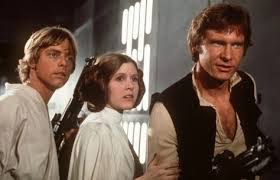
 When I was a kid, like many of my generation, I idolized Star Wars.
When it first hit the screens in 1977, we’d never seen anything like it. It was a revelation. We devoured the merchandise, dressed like the characters for Halloween and some of us even tried to learn to speak Wookie. It had an impact on us in a way no other movie had until that point.
In hindsight, with the cold, cruel light of 2019, the story line is probably simplistic, even cheesy. The characters were more caricatures without any real depth. And the effects, when compared with today’s CGI, are so-so. But, damn, for its day, Star Wars was the coolest thing we had ever seen.
And more importantly, for my 7-year old self, it perfectly explained the complicated, and slightly scary, world in which I was growing-up.
Just like there is every decade, there was a lot going on in the world in the 1970s, and at the time, I was only starting to get vague notions of it all. The Cold War was raging, and the Vietnam War had scarred the decade. The Oil Crisis had exposed our vulnerability to, and dependence on, oil. In Canada, we watched the October Crisis, hosted the Olympics and cheered when Paul Henderson score that fateful goal against the Soviets. And on top of all that, acid rain was threatening our very existence.
At seven, I didn’t understand most of what was happening. I picked up the crumbs of elation and anxiety from the adults around me about global events, mixed in with the larger pieces of their own personal dramas. As I started engaging with the world more, it became clear that it was far more convoluted and complicated than I ever dreamed. But the Star Wars saga neatly laid it out for me clearly and succinctly. There was good (light), there was bad (dark) and there was a fear that I recognized in my bones: a fear of loss.
At the heart of Star Wars, and of every human drama, is the fundamental fear that the heroes would lose – their homes, their families and ultimately, their lives.
And perhaps Star Wars has come to mind because I’ve been thinking a lot lately about loss, and how it, or the fear of it, shapes our lives. In particular, I’ve been thinking about the clash that is currently shaping the political agenda in Canada and around the world. So much of it is so very much rooted in the fear of loss, and in our tendency to see the world in terms of light and dark.
On one side, there is the fear that immigration and prioritization of environmental stewardship will result in a lost way of life. And not in the abstract either. There are legitimate, well placed fears that decisions are shifting national economic foundations, resulting in the loss of industries, the loss of jobs, the loss of livelihoods, which in turn translate into the possible loss of homes, of social and cultural cohesion, of a way of life and safety.
On the other side, there are fears about isolationism and global environmental forces. These are equally well-placed, and equally legitimate. Here, there are fears that perceived damage to established political systems and lack of action on economic and environmental stewardship will result in the loss of industries, the loss of jobs, the loss of livelihoods, which in turn translate into the possible loss of homes, of social and cultural cohesion, of a way of life and safety.
My repetitive words are not a coincidence nor poor editing.
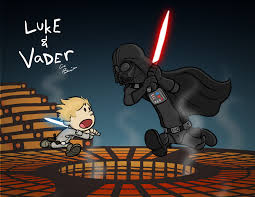 I am aware that there are people on the extreme fringes of the political debates, and some whose motivations and fears are rooted in bigotry, sexism, racism and just simple hatred. Their thoughts and actions are garnering a great deal of attention, obscuring paths to solutions. They have skewed the debate, misdirecting attention, and hijacking the agenda with ill-informed and hateful ignorance.
But, the fact of the matter is, that no matter on what side of the political fulcrum you hang your hat upon, our fear of loss is the same. Where we differ are on the causes and the answers. And rather than focus on the fear that we share, we spend our time ridiculing and vilifying the other because fear makes us do silly and illogical things.
And I can’t help wonder if our overly simplistic view of the world is something that was reinforced through Star Wars. What we have in common is our fundamental and overwhelming fear of loss. But we are trapped in the view of the world that we saw in Star Wars.
Don’t get me wrong, I am not blaming the franchise, nor do I think Star Wars taught us to vilify those with different ideas or opinions. Rather, I think Star Wars, and let’s face it many Hollywood archetypical movies, fed into our expectations that there is good and there is bad. And it did so, because at the time, the world was being shaped by good and evil forces. Here in North America, it seemed simple. Communism, bad! Middle eastern oil conglomerate, bad! Capitalism, good! Democracy, good!
And it’s not that the world is any more complicated or nuanced than it was back then, far from it. Rather, our access to information has hugely expanded. Ironically, even while globalization and the internet has made it easier to see the broader shapes in the world with all their nuance, we use these tools to reinforce our polarized views of political and social issues. Today, it’s possible to access ideas and opinions born of different experiences and perspectives than our own with a few key taps, and yet we flock to websites that sustain our own views.
We Generation Xers, who are now taking over leadership and power from the Baby Boomers, were brought up on the good and evil world view. But, we’re now trying to navigate in an ocean of information, brimming with nuance and shades of grey. It seems that we cling to our myopic view by seeking out the information and opinions that align with our own, despite the plethora of shades, and shadows, out there.
It’s probably worth noting that I see some hope in Millenials. They were brought up in a slightly more nuanced world, with the internet as one of their primary instructors and sources of information. I see evidence of this in the prequel Star Wars stories released in the 1990s while Millenials were coming of age. Those movies had significantly more nuanced characters. The hero had a dark side, and we watched him do bad things, but simultaneously felt sorry for him.
The bottom line is that we all have the information and tools needed – literally at our fingertips – to cross the growing divide. All we really need to do is reach out and take them. If we don’t do it, we will be the first generation to leave the world in a worse economic position then we found it, and our legacy will be irreparable environmental devastation.
We can no longer let the fear of our own losses lose everything for our children.
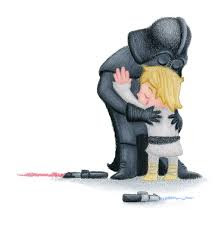
Maybe Star Wars indeed taught us everything we need to know after all. Maybe we need to be a little more like Luke Skywalker when he
reached out to Darth Vader, looking past anger and mistrust, to find the good in the “dark” side, and win the day.

 Median Mama